>>

Chewy, nut-forward Italian almond cookies studded with pine nuts — a classic sweet that's elegant, simple, and endlessly shareable.
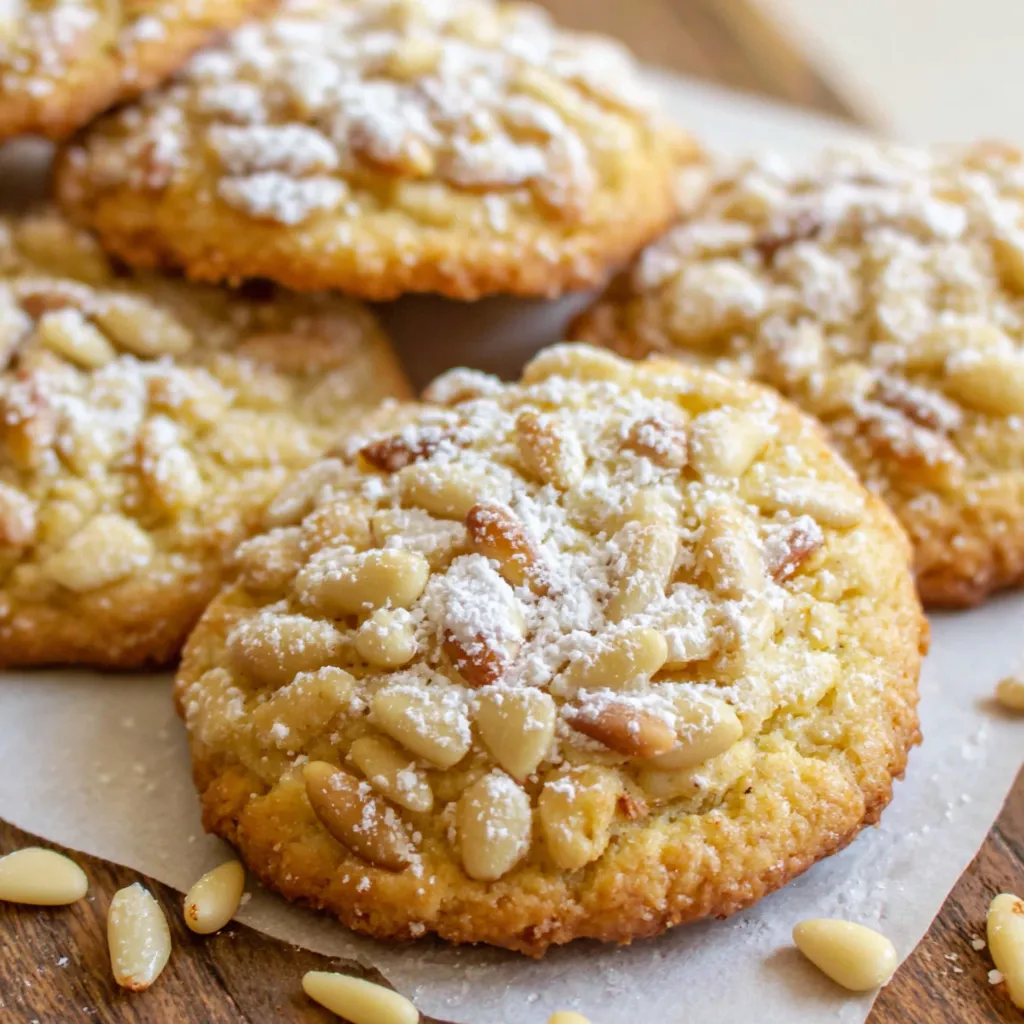
This batch of pignoli cookies has been my go-to when I want a dessert that feels special without a lot of fuss. I first encountered these in a small bakery during a winter trip to an Italian market; the cookies were glossy on the outside, soft and tender inside, and the pine nuts gave each bite a buttery, resinous crunch that felt luxurious. I tried to replicate that memory at home and, through a few adjustments to chill time and portioning, landed on the version you see here — reliably chewy, slightly shiny in the centers, and crowned with toasted pine nuts.
I love these for holidays and for gifting because they travel well and need no frosting — a dusting of powdered sugar is all they ask for. The dough is forgiving: almond paste provides texture and deep almond flavor so you don't need ground almonds or extracts beyond a touch of vanilla. Chill time is the secret to clean shaping and a better bite, so plan ahead; the hands-on portion is short, the payoff large. Expect a sweet almond aroma filling the kitchen that invites family and friends to the table.
In my kitchen these cookies always bring a quiet excitement: my neighbor used them as a hostess gift and came back asking for the recipe, and my teenager declared them the only cookie worth packing for school parties. The ease of preparation and the impressive result make these a repeat favorite.
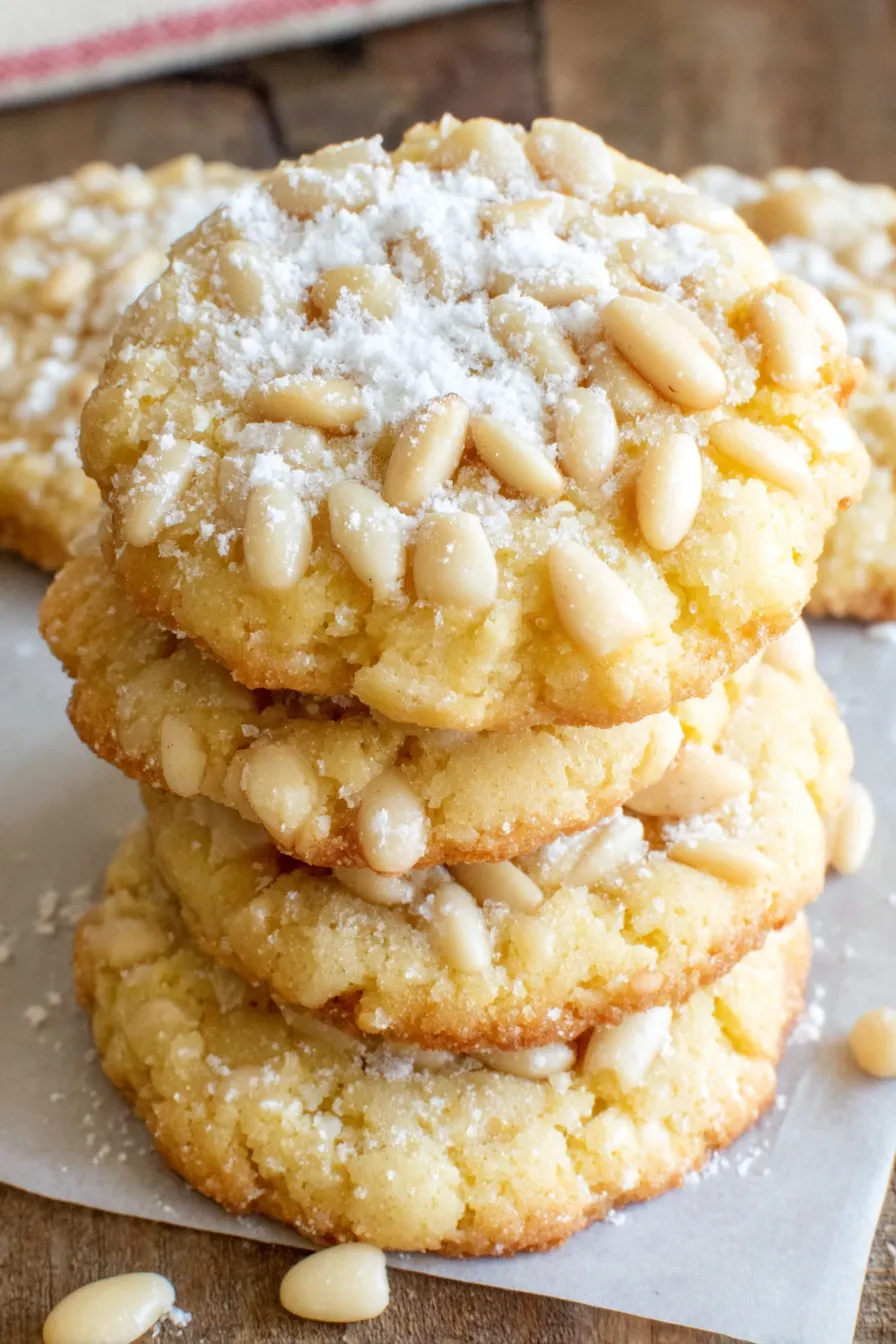
My favorite part about these cookies is how impressive they feel despite minimal effort. I once took a tin to a holiday party and every cookie disappeared within an hour — even guests who usually avoid nuts came back for more. Over the years I’ve learned to weigh my portions for consistency and to chill the dough longer when I need a cleaner, less sticky handling experience.
Store baked cookies in an airtight container at room temperature for up to four days; separate layers with parchment to prevent sticking. For longer storage, freeze cooled cookies in a single layer on a sheet tray until firm, then transfer to a freezer-safe container or bag for up to three months. To refresh frozen cookies, let them thaw at room temperature for 30–60 minutes; for a just-baked warmth reheat in a 300°F oven for 3–4 minutes to restore softness and aroma. If you’re storing unbaked, shaped dough balls, freeze them on a sheet tray until solid, then bag for up to two months — add a minute or two to the bake time when cooking from frozen.
If you can’t find almond paste, smooth marzipan can work as a substitute though it may be sweeter — reduce added sugar slightly if using marzipan. For a nut-free alternative, this approach isn’t ideal because the almond paste is foundational; instead consider a different cookie category. If pine nuts are prohibitively expensive, try roughly chopped blanched almonds for a similar look and crunch, though the resinous flavor will differ. For a more nuanced flavor, fold in 1/4 teaspoon almond extract along with the vanilla, but use sparingly to avoid an artificial taste.
Serve on a pretty platter with a light dusting of powdered sugar for holidays and gatherings; they pair wonderfully with espresso, Vin Santo, or a bright citrus tea. Add a few fresh berries or candied orange peel on the side to cut through the sweetness. For an elegant dessert plate, accompany two cookies with a small scoop of vanilla gelato and a drizzle of good-quality honey. They also make thoughtful gifts — stack in a decorative box separated by parchment rounds and tie with ribbon.
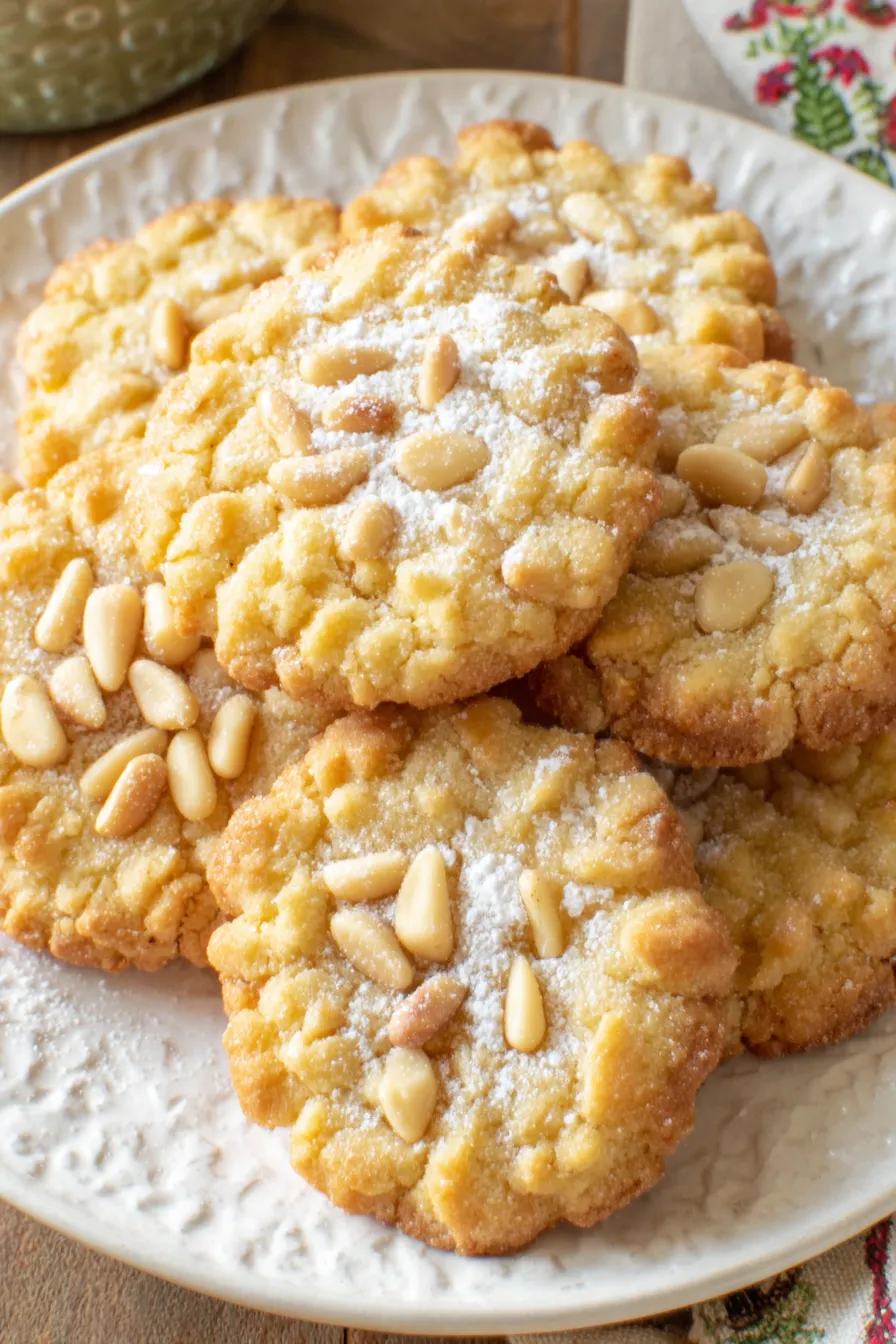
Pignoli cookies originate from Italian baking traditions, particularly Sicilian and southern Italian cuisines where almond-based sweets are common due to abundant almond and pine forestry. The word pignoli refers to the pine nuts that stud each cookie. They appear across Italy in slightly different forms — some versions use egg whites instead of whole egg for a lighter texture, while others fold in ground almonds. In Italian-American households, they became a holiday staple, carried over in tins and shared at family gatherings where small, richly flavored pastries are prized.
In winter, add a touch of citrus zest to the dough (1 teaspoon finely grated orange zest) to brighten the flavor; for a festive twist, sprinkle a few colored sugar crystals before baking. In spring and summer, serve with a citrus salad or light sorbet. For holiday tables, press a tiny piece of candied lemon peel onto each cookie after rolling in pine nuts for a festive accent. You can also incorporate finely chopped pistachios in addition to pine nuts for a visually striking green contrast.
Make the dough up to 48 hours ahead and leave tightly wrapped in the refrigerator until ready to shape. For cookie exchanges or large batches, shape the dough into balls and freeze them on a tray; once solid, transfer to a zip-top bag. Bake directly from frozen, adding 1–2 minutes to the bake time and watching for golden edges. Use a small cookie scoop for uniform sizing — this helps with even bake times and consistent presentation.
These cookies capture the idea that simple ingredients, handled with care and patience, produce something memorable. Make a batch when you want a modest but elegant sweet to share — friends and family will ask for the recipe before the tin is empty.
Chill the dough at least 4 hours to firm it for rolling — this prevents sticking and improves texture.
Use a small cookie scoop (about 1 tablespoon) for uniform cookies and even baking.
If pine nuts are very fresh, briefly toast them in a dry skillet for 2–3 minutes for added aroma, but cool them before rolling.
This nourishing pignoli cookies recipe is sure to be a staple in your kitchen. Enjoy every moist, high protein slice — it is perfect for breakfast or as a wholesome snack any time.
Yes. If you chill the dough overnight it will be easier to shape and will produce cleaner-looking cookies with a chewier interior.
Use almond paste labeled gluten-free. The recipe contains nuts and egg, so it is not suitable for people with nut or egg allergies.
This Pignoli Cookies recipe makes perfectly juicy, tender, and flavorful steak every time! Serve with potatoes and a side salad for an unforgettable dinner in under 30 minutes.
Break the almond paste into smaller pieces in a food processor and add the granulated sugar. Pulse in short bursts until the mixture begins to form a paste and the sugar starts to dissolve, about 2 minutes total, scraping down the bowl as needed.
Add the vanilla extract, salt, and the whole egg to the processor. Pulse until the ingredients come together into a cohesive dough that holds when pinched; avoid over-processing to prevent warming the dough.
Remove the dough, wrap it in plastic wrap, and form into a loose log or ball. Chill in the refrigerator for at least 4 hours or up to 48 hours to firm the dough for shaping.
Preheat the oven to 350°F and line a baking sheet with parchment. Place the pine nuts in a shallow bowl for rolling; optionally toast and cool them briefly for a deeper flavor.
Scoop approximately 1 tablespoon of dough and roll into balls. Roll each ball lightly in pine nuts and place about 2 inches apart on the prepared sheet.
Bake for 16–18 minutes until edges are lightly golden and centers remain slightly shiny. Cool on the baking sheet 5–7 minutes, transfer to a rack, and dust with powdered sugar once cool.
Last Step: Please leave a rating and comment letting us know how you liked this recipe! This helps our business to thrive and continue providing free, high-quality recipes for you.
Leave a comment & rating below or tag
@royalmorsel on social media!

Juicy beef, sweet-charred peppers, and a silky queso drizzle turn these sliders into the ultimate crowd-pleasing bite for game day or weeknight fun.
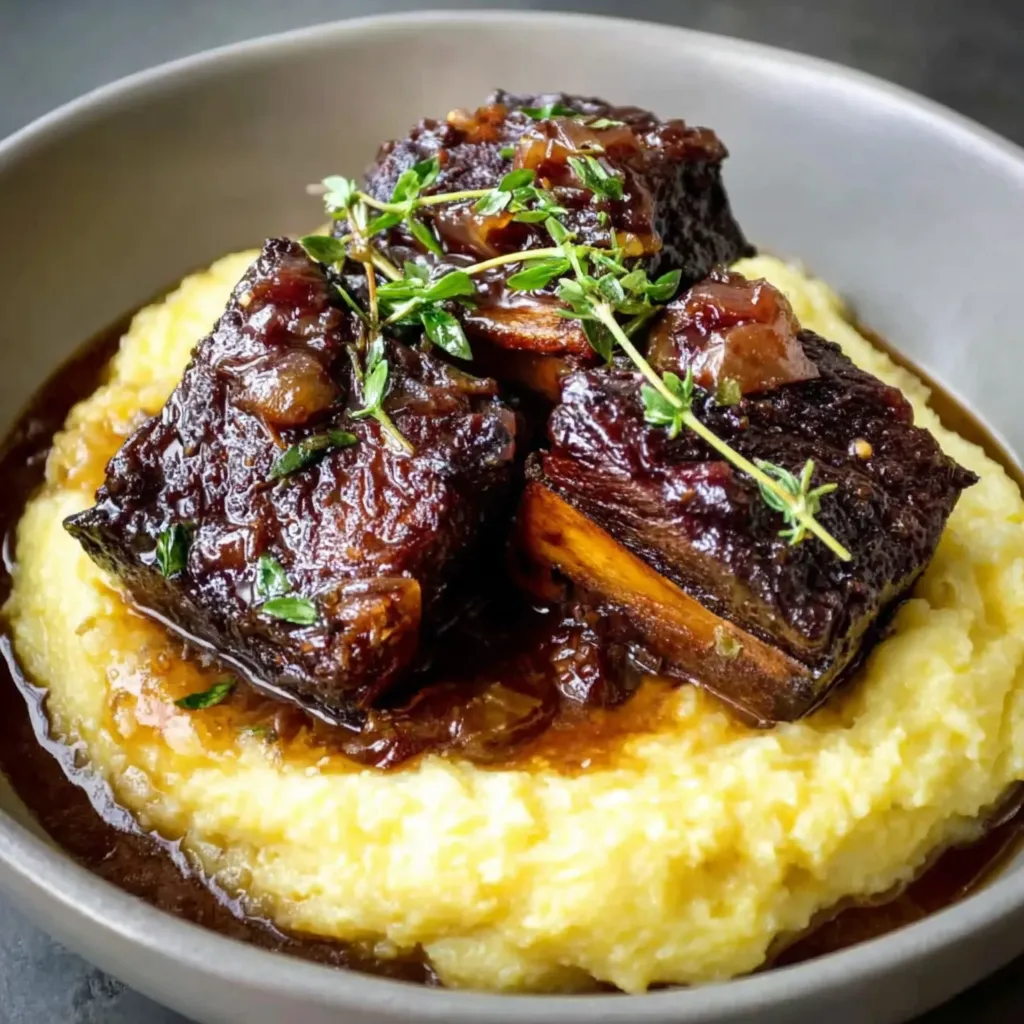
Melt-in-your-mouth braised short ribs nestled over creamy garlic mashed potatoes, all in a rich, herb-scented sauce that feels like a warm hug.
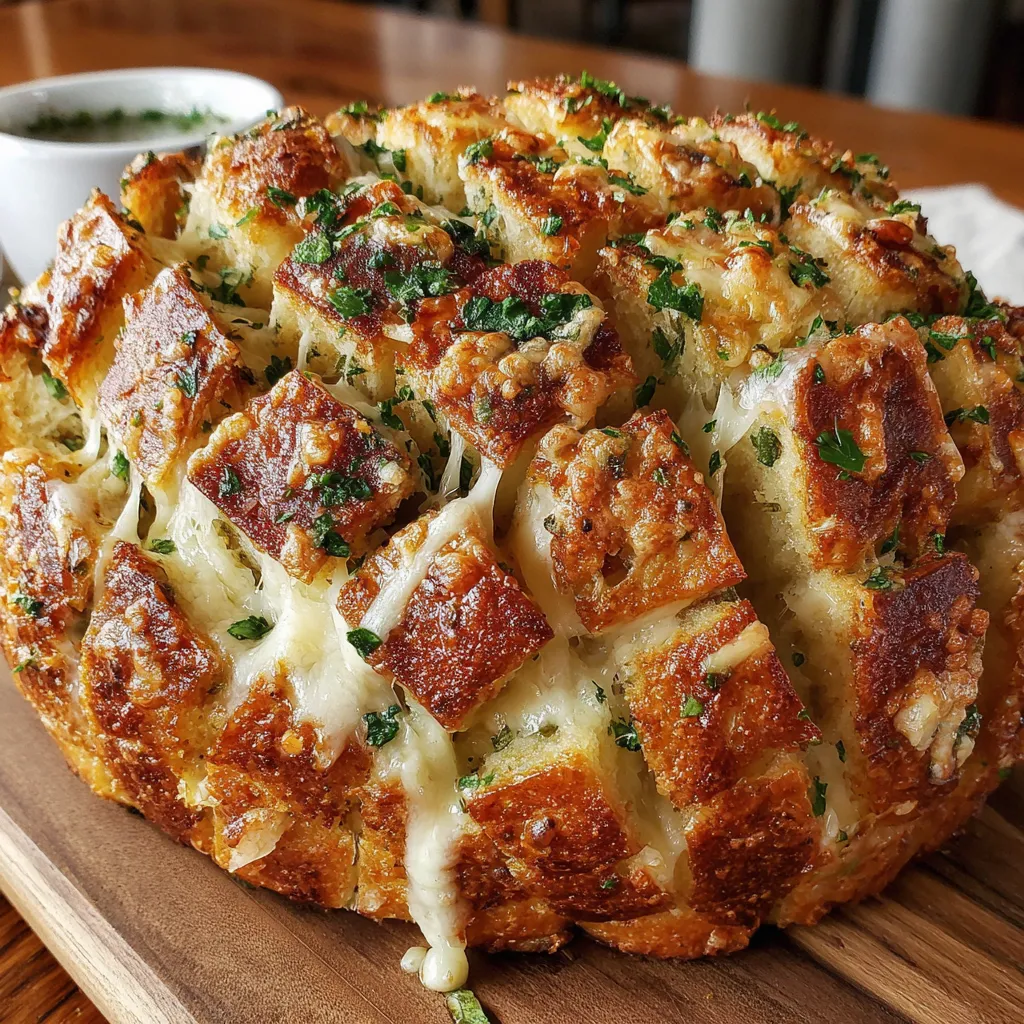
Golden, garlicky pull-apart loaf swaddled in buttery herbs and stretchy mozzarella that begs to be shared warm from the oven.
Leave a comment & rating below or tag @royalmorsel on social media!
Enjoyed this recipe? Share it with friends and family, and don't forget to leave a review!
This recipe looks amazing! Can't wait to try it.
Comments are stored locally in your browser. Server comments are displayed alongside your local comments.

Join to receive our email series which contains a round-up of some of our quick and easy family favorite recipes.